Baron František Ringhoffer: The Industrialist Founder of Kozel
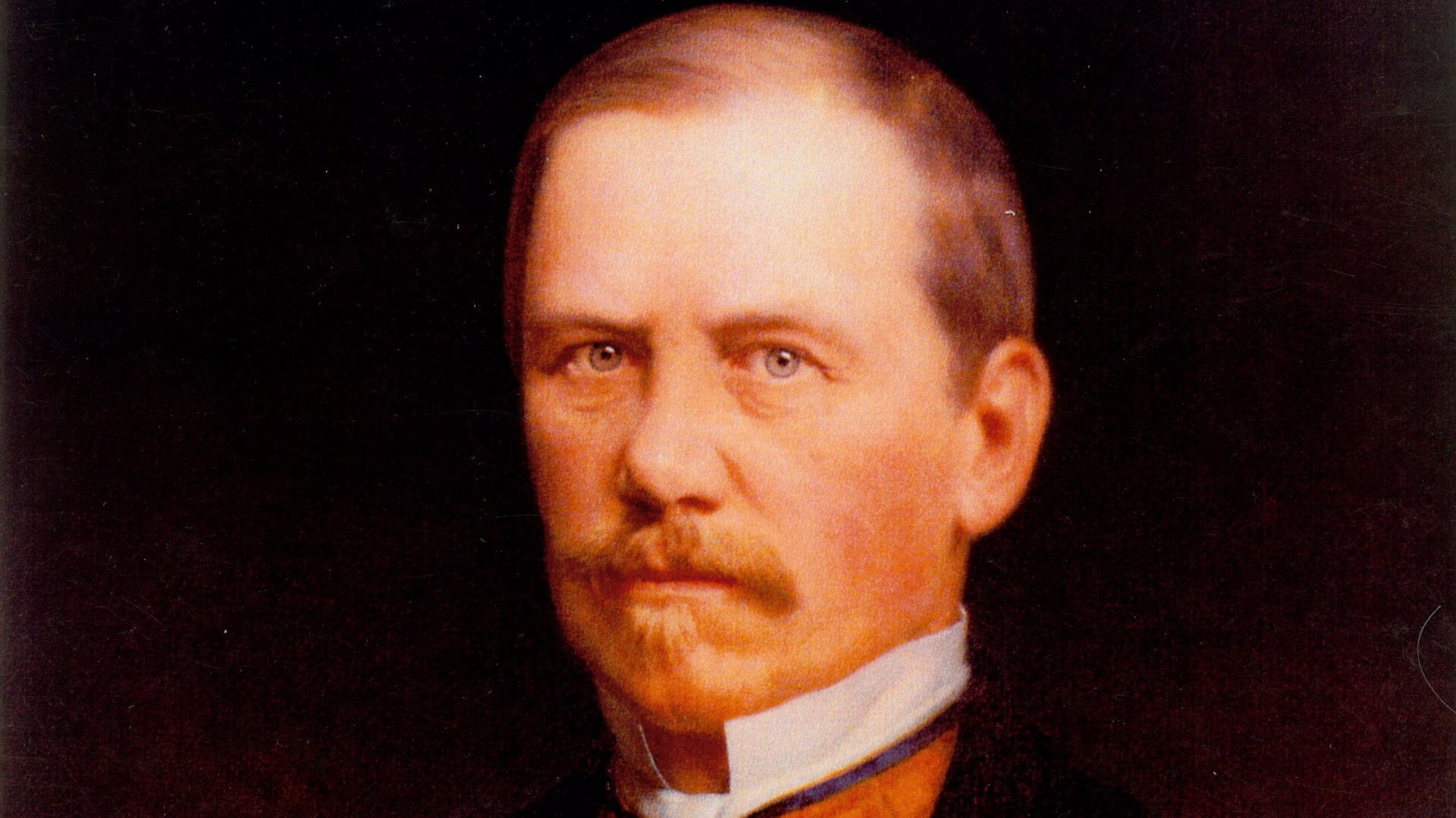
Baron František Ringhoffer: Industrial Visionary and Founder of the Kozel Brewery
Introduction
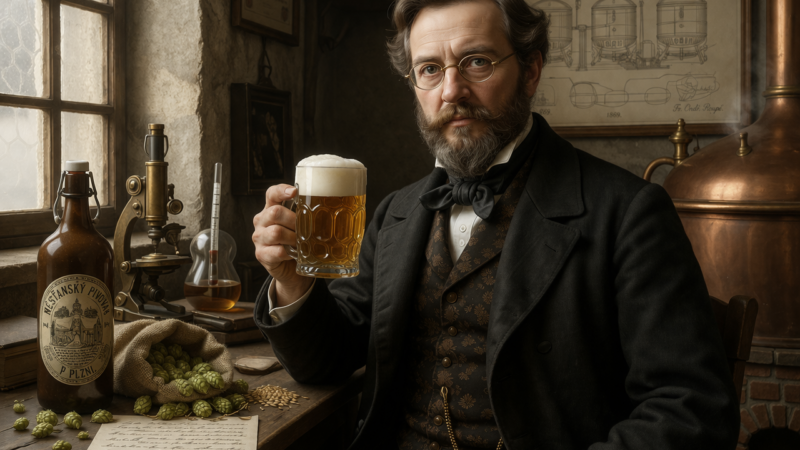
Baron František Ringhoffer stands as one of the most influential industrialists of 19th-century Bohemia. Though widely remembered for his pioneering work in railway manufacturing, his impact on Czech brewing—especially through the founding of the brewery in Velké Popovice—has left an enduring legacy in the world of beer.
The brewery he established would later become known as Velkopopovický Kozel, one of the most recognizable Czech beer brands worldwide. While Ringhoffer himself did not live to see the first beer brewed there, his entrepreneurial foresight and industrial mindset laid the foundation for a brewery that would shape beer culture far beyond the Czech lands.
Early Life and Family Background
rantišek Ringhoffer was born on April 28, 1817, in Prague, into a family already deeply rooted in craftsmanship and industry.
The Ringhoffer family’s rise began with his grandfather, a modest coppersmith who arrived in Prague in the late 18th century and established a workshop producing brewing equipment. This early connection to brewing technology would later influence the family’s industrial trajectory—and indirectly, František’s own involvement in beer production.
His father expanded the business significantly, moving from simple copperware into manufacturing equipment for breweries, distilleries, and sugar refineries. By the time young František came of age, the family enterprise was already a respected industrial operation.
Educated at the Prague Polytechnic and further trained through travels in Western Europe, Ringhoffer gained exposure to the latest industrial advancements of his time. These formative experiences shaped his worldview: he understood that the future belonged to innovation, mechanization, and large-scale production.
Rise as an Industrial Magnate
After returning from abroad, Ringhoffer transformed the family business into a modern industrial powerhouse. He moved operations to Prague’s Smíchov district and, in 1852, established a large engineering works that would become one of the most important manufacturing plants in the Austro-Hungarian Empire.
His company specialized in railway wagons at a time when rail transport was revolutionizing Europe. Under his leadership, the Ringhoffer factory grew into the largest manufacturer of railway cars in the empire and one of the biggest in Europe.
This success brought him wealth, prestige, and political influence. He served as mayor of Smíchov from 1861 to 1865 and later became a member of the Czech provincial parliament. His contributions to industry were recognized by Emperor Franz Joseph I, who granted him noble status, eventually elevating him to the rank of baron.
Ringhoffer embodied the archetype of the 19th-century industrialist: a man who combined technical knowledge, entrepreneurial ambition, and political engagement.
Acquisition of Velké Popovice and Vision for Brewing
By the late 1860s, Ringhoffer had already achieved remarkable success in engineering. Yet his ambitions extended beyond heavy industry.
In 1870, he purchased estates in the countryside southeast of Prague, including the village of Velké Popovice. These lands included a former manor and agricultural facilities, as well as a long but declining tradition of brewing that dated back to the Middle Ages.
At the time, the Czech lands were experiencing a brewing renaissance, driven by advances in bottom-fermented lagers and industrial brewing techniques. Ringhoffer recognized an opportunity: by applying modern technology and industrial efficiency to brewing, he could create a high-quality product for a rapidly growing market.
In 1871, he began constructing a new brewery and malt house on the outskirts of Velké Popovice. Unlike many traditional breweries, this facility was designed from the ground up using the latest technological innovations of the era.
Building the Kozel Brewery
The brewery that Ringhoffer envisioned was not just a local enterprise—it was a modern industrial brewery, equipped with advanced machinery and designed for efficiency and scale.
Construction proceeded rapidly, and the facility incorporated contemporary brewing equipment, reflecting the Ringhoffer family’s long-standing expertise in manufacturing brewing technology.
However, tragedy struck before the project could be completed.
František Ringhoffer died unexpectedly on March 23, 1873, at the age of 56. He never lived to see the brewery operational.
Just one year later, on December 15, 1874, the first batch of beer was brewed at the Velké Popovice brewery. Though he did not witness this milestone, it was the direct result of his vision, investment, and planning.
Birth of Velkopopovický Kozel
The brewery quickly gained a reputation for producing high-quality beer. Over time, it became known as Velkopopovický Kozel—a name that would become synonymous with Czech brewing tradition.
The name “Kozel” (meaning “goat” in Czech) has roots in the German word “Bock,” a type of strong beer originating from the town of Einbeck. Through linguistic evolution, “Ein Bock” became associated with the goat symbol, which was later adopted as the brewery’s emblem.
A charming legend adds a human touch to the brand’s identity: a traveling French painter, grateful for the hospitality he received at the brewery, created the iconic goat logo that still represents Kozel today.
By the early 20th century, the brewery had expanded significantly, producing tens of thousands of hectoliters annually and becoming one of the most prominent breweries in the region.
Shaping the Future of Beer
Although Ringhoffer himself was not a brewer by trade, his influence on beer production was profound.
- Industrialization of Brewing
Ringhoffer brought an industrial mindset to brewing. By applying engineering principles, he helped transition beer production from small-scale artisanal methods to modern industrial processes.
His brewery in Velké Popovice was equipped with cutting-edge technology, allowing for consistent quality and higher production volumes.
- Integration of Technology and Tradition
Unlike purely industrial ventures, the Kozel brewery maintained a balance between technological innovation and traditional brewing techniques. This combination became a hallmark of Czech brewing and contributed to the global reputation of Czech lager.
- Expansion of Beer Culture
The success of the Velké Popovice brewery contributed to the broader popularity of Czech beer, both domestically and internationally. Today, Kozel is exported to dozens of countries and remains a symbol of Czech brewing excellence.
- Infrastructure and Distribution
Ringhoffer’s experience in railway manufacturing likely influenced the brewery’s logistical capabilities. Efficient transportation networks allowed beer to reach wider markets—an essential factor in the brewery’s growth.
Life Beyond Industry: Politics and Society
František Ringhoffer was not only an industrialist but also an active public figure.
As mayor of Smíchov, he played a key role in transforming the district into an industrial hub. His leadership helped shape the urban and economic landscape of Prague during a period of rapid modernization.
He also served in the Czech parliament, where he contributed to economic and industrial policy. His dual role as businessman and politician reflects the interconnected nature of industry and governance in the 19th century.
Final Years and Death
Despite his many achievements, Ringhoffer’s life was relatively short.
In 1873, the same year he was elevated to baronial status, he died unexpectedly at the age of 56. His death came just as his brewery project was nearing completion.
He was buried in the countryside he had come to love, near his estates in the Velké Popovice region. This area would remain closely associated with the Ringhoffer family for generations.
Legacy
Industrial Legacy
Ringhoffer’s engineering works continued to thrive after his death, eventually becoming part of major industrial enterprises such as Tatra and ČKD. His contributions to railway manufacturing had a lasting impact on European transportation.
Brewing Legacy
More significantly for beer history, the brewery he founded evolved into one of the Czech Republic’s most iconic beer producers.
Velkopopovický Kozel is now enjoyed worldwide and remains a symbol of Czech brewing tradition. Its success is a testament to Ringhoffer’s foresight in combining modern industry with traditional craftsmanship.
Cultural Impact
The Kozel brand, with its iconic goat symbol and rich history, has become part of Czech cultural identity. The brewery has survived wars, political upheavals, and economic transformations, continuing to produce beer since 1874 without interruption.
Conclusion
Baron František Ringhoffer was far more than the founder of a brewery. He was a visionary industrialist who understood the transformative power of technology and innovation.
From his early beginnings in a family of craftsmen to his rise as a baron and industrial leader, Ringhoffer exemplified the entrepreneurial spirit of the 19th century. His decision to build a brewery in Velké Popovice may have seemed like a side venture compared to his engineering empire, but it proved to be one of his most enduring contributions.
Though he never tasted the beer produced in his brewery, his legacy lives on in every glass of Kozel. His story is not just one of industry or brewing—it is a story of vision, ambition, and the lasting impact of innovation on culture and everyday life.