Petr Vok of Rožmberk: The Last Rosenberg and His Enduring Legacy
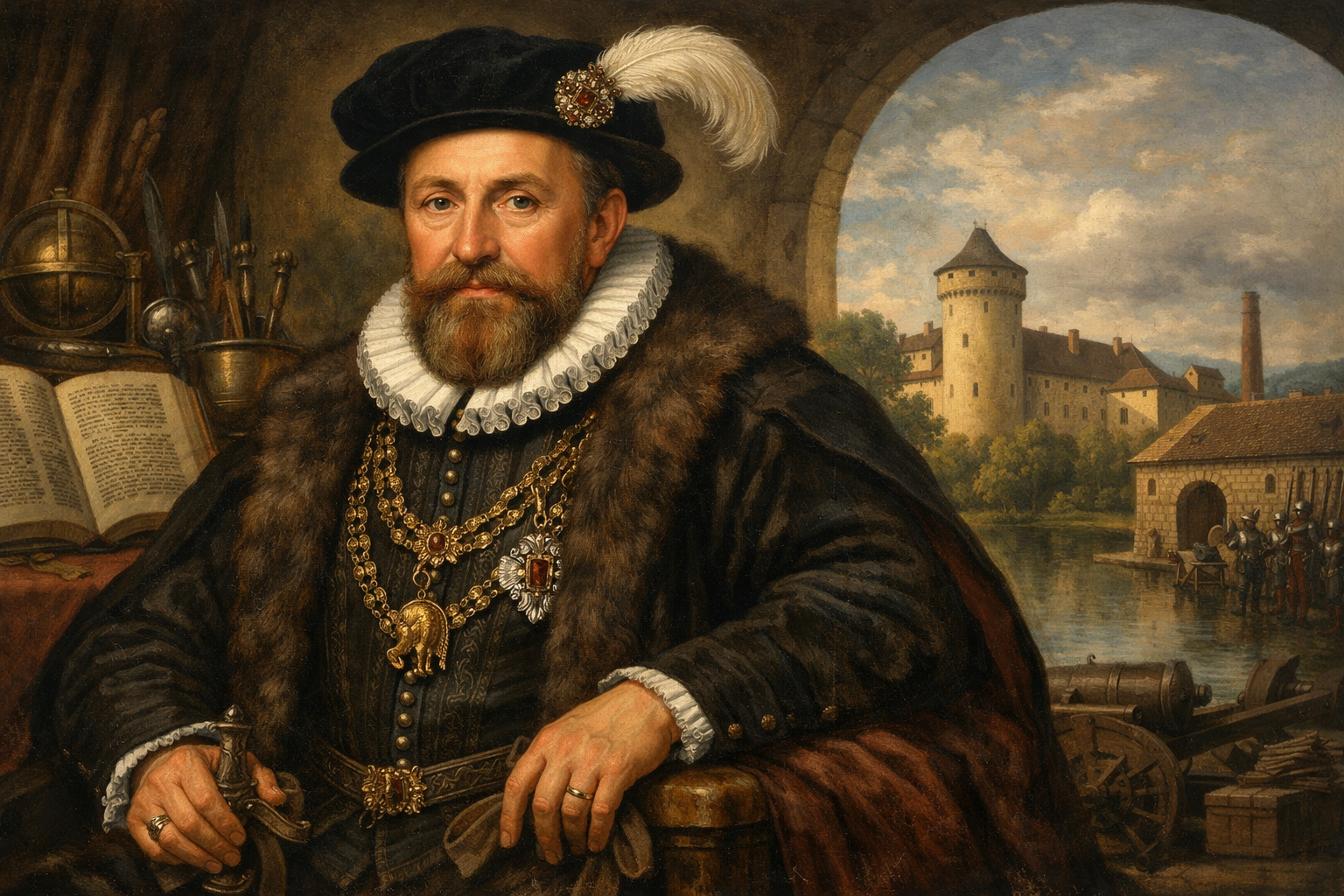
Few figures in Czech history embody the twilight of a great noble house as vividly as Petr Vok of Rožmberk. A man of contradictions—both a pleasure-seeking aristocrat and a pragmatic statesman, a collector of knowledge and a reluctant economic reformer—Petr Vok lived at the crossroads of Renaissance culture and the turbulent prelude to the Thirty Years’ War. His life is deeply intertwined with South Bohemia, especially the town of Třeboň, where he spent his final years and where his legacy continues to shape local culture, architecture, and even brewing traditions.
This article explores his early life, his transformation into a responsible ruler, his connection to the brewery now known as Bohemia Regent, the armory he built that later became part of that brewery, and his lasting impact on Czech history.
Early Life: A Noble Born Into Shadow
Petr Vok was born on October 1, 1539, in Český Krumlov, into the powerful Rosenberg (Rožmberk) family, one of the most influential noble houses in Bohemia. As the younger brother of Vilém of Rožmberk, Petr spent much of his youth living in his brother’s shadow. Vilém was widely regarded as a capable politician and statesman, while Petr developed a reputation as a cultured but somewhat carefree aristocrat.
After their father’s death, Petr was raised partly in Jindřichův Hradec and later resided in Český Krumlov. His education reflected Renaissance ideals—he cultivated interests in literature, science, and art, and developed a lifelong passion for collecting books and curiosities.
Unlike many nobles of his time, Petr Vok was also religiously flexible. He moved away from Catholicism, eventually aligning with Protestant movements, including the Unity of the Brethren. This openness would later influence his political and social actions.
A Life of Leisure Turns to Responsibility
For much of his early adulthood, Petr Vok led what many historians describe as a “bohemian” lifestyle—focused on culture, relationships, and intellectual pursuits rather than governance. However, everything changed in 1592 when his brother Vilém died without heirs.
Suddenly, Petr inherited not only vast estates but also enormous debts.
Despite doubts about his capabilities, he proved to be a surprisingly effective manager. He took decisive action to stabilize the family’s finances, including selling peripheral estates and restructuring economic operations.
His most painful decision came in 1601, when he sold the family’s ancestral seat in Český Krumlov to Rudolf II. This marked a symbolic end to centuries of Rosenberg dominance in the region.
Třeboň: A New Center of Power and Culture
After leaving Český Krumlov, Petr Vok moved to Třeboň, which became his final residence and the center of his activities.
In Třeboň, he created a remarkable intellectual and cultural hub. He transported vast archives and collections from Krumlov, forming the foundation of what became one of the most significant noble libraries in Central Europe.
The town also became a site of quiet political maneuvering. During a period of rising religious tension in Europe, Petr Vok played a role in Protestant politics and was involved in securing the Rudolfine Letter of Majesty in 1609, which granted religious freedoms to the Bohemian estates.
The Armory and Its Transformation Into a Brewery
One of Petr Vok’s lesser-known but fascinating contributions lies in the infrastructure he commissioned in Třeboň—specifically, an armory (zbrojnice).
At the beginning of the 17th century, Petr Vok ordered the construction of a substantial armory complex designed to store weapons and ammunition.This structure would later undergo a remarkable transformation.
Over time, as military needs changed and ownership of the estate passed to the Schwarzenberg family, the armory was repurposed. Its underground spaces and robust construction made it ideal for brewing and storing beer. By the 18th century, it had been converted into part of a brewery complex, eventually becoming integrated into what is now known as Bohemia Regent.
Today, visitors to the brewery can still experience these historic spaces—particularly the so-called “Armory Brewery Cellar,” where original stone walls and vaulted ceilings evoke the building’s layered past.
This transformation from armory to brewery is symbolic: a structure once dedicated to war became a place of craft, community, and tradition—perfectly reflecting the broader evolution of Central Europe.
Connection to Bohemia Regent Brewery
The brewery in Třeboň itself dates back to 1379, making it one of the oldest in the world.
While Petr Vok did not found the brewery, his architectural and infrastructural contributions—especially the armory—directly influenced its later development. The site he built upon became part of the brewery’s expanding complex under later ownership.
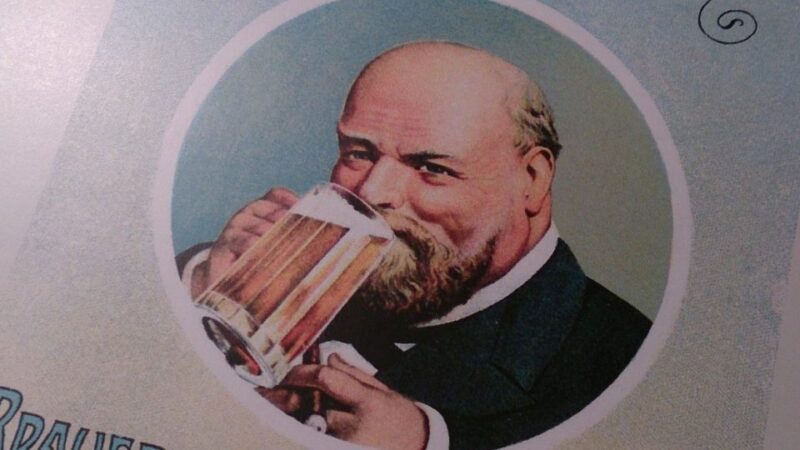
In modern times, Bohemia Regent honors this connection not only through its historical narrative but also through products such as beers named after Petr Vok, including a semi-dark specialty brew that carries his name.
Thus, Petr Vok’s legacy lives on not just in archives and castles, but in the living tradition of Czech brewing.
Personal Life: Marriage, Loss, and Character
Petr Vok married relatively late in life, at the age of forty, to Kateřina of Ludanice. Their marriage, however, was troubled, and they had no children.
After her death, Petr became increasingly introspective. He devoted more time to his intellectual pursuits, expanding his collections and engaging in philosophical and religious reflection.
Despite his responsibilities, he retained a reputation as a charismatic and somewhat unconventional nobleman—fond of social life, women, and culture. Over time, folklore transformed him into a romanticized figure: a generous lord, a Renaissance gentleman, and even a lovable rogue.
Final Years and Death
Petr Vok spent the last decade of his life in Třeboň, surrounded by his books, collections, and loyal retainers.
These years were not without turmoil. In 1611, during the invasion of Bohemia by forces from Passau, Petr Vok made a dramatic decision: he used his own wealth, including family treasures, to pay off the invading army and prevent destruction in the region.
Later that same year, on November 5 or 6, 1611, Petr Vok died in Třeboň.
He was buried in the Rosenberg family tomb at the monastery in Vyšší Brod, marking the end of the Rosenberg line.
Legacy: The End of an Era and a Cultural Icon
With Petr Vok’s death, the Rosenberg family—one of the most powerful noble houses in Bohemia—ceased to exist.
Yet his legacy is far from one of decline alone.
Cultural and Intellectual Legacy
He preserved and expanded one of the most important aristocratic libraries of his time.
He supported education, art, and intellectual life in South Bohemia.
He laid the foundations of the Třeboň archive.
Political and Social Legacy
He contributed to religious tolerance during a deeply divided era.
His actions during the Passau invasion demonstrated leadership and sacrifice.
Architectural and Brewing Legacy
His armory became a key part of a brewery complex that still operates today.
The connection between his infrastructure and Bohemia Regent ties him directly to one of the oldest brewing traditions in Europe.
Popular Memory
In Czech culture, Petr Vok occupies a unique space. He is remembered not only as a historical figure but also as a character of legend—depicted in films, literature, and folklore as a charming, flawed, and deeply human nobleman.
Conclusion
The life of Petr Vok of Rožmberk is a story of transformation: from a carefree nobleman to a responsible steward, from the heir of a great dynasty to its final representative. His decisions—whether economic, political, or architectural—had lasting consequences that continue to shape Czech history and culture.
Perhaps nowhere is this more tangible than in Třeboň, where his presence still lingers—in the castle halls, in the archives he helped build, and even in the cellars of a brewery that grew from the foundations of his armory.
In the end, Petr Vok was not merely the last of the Rosenbergs. He was a bridge between eras—a Renaissance man whose legacy endures in stone, in story, and even in a glass of Czech beer.
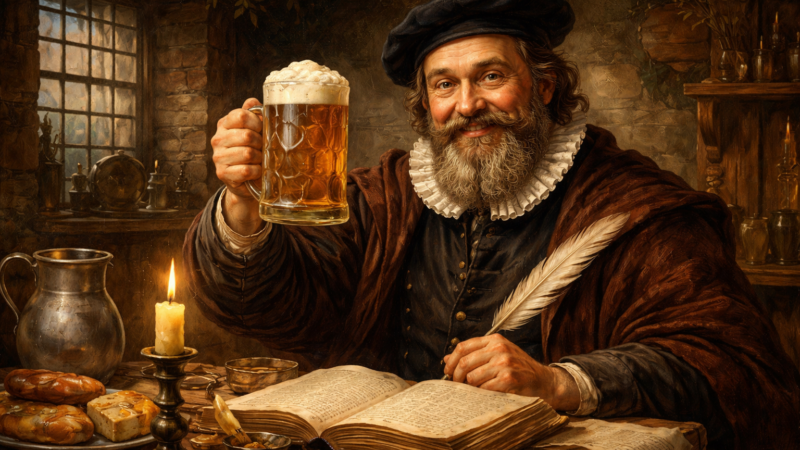
Image: Illustrative