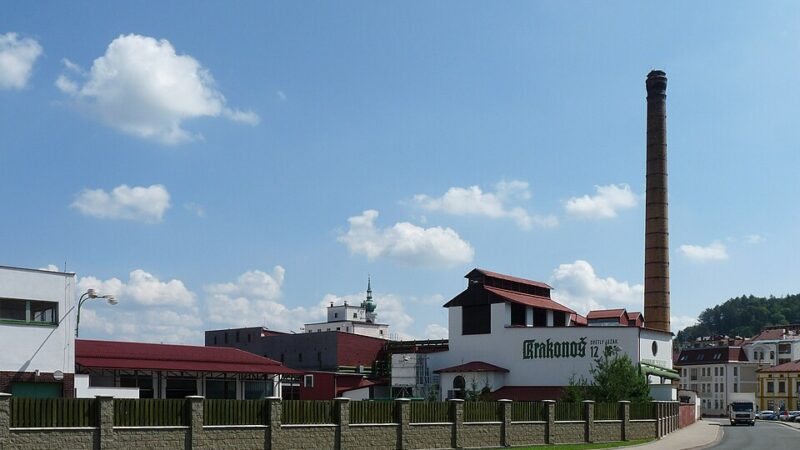
Introducing Czech Breweries, Part 12 – Pivovar Protivín (Platan)
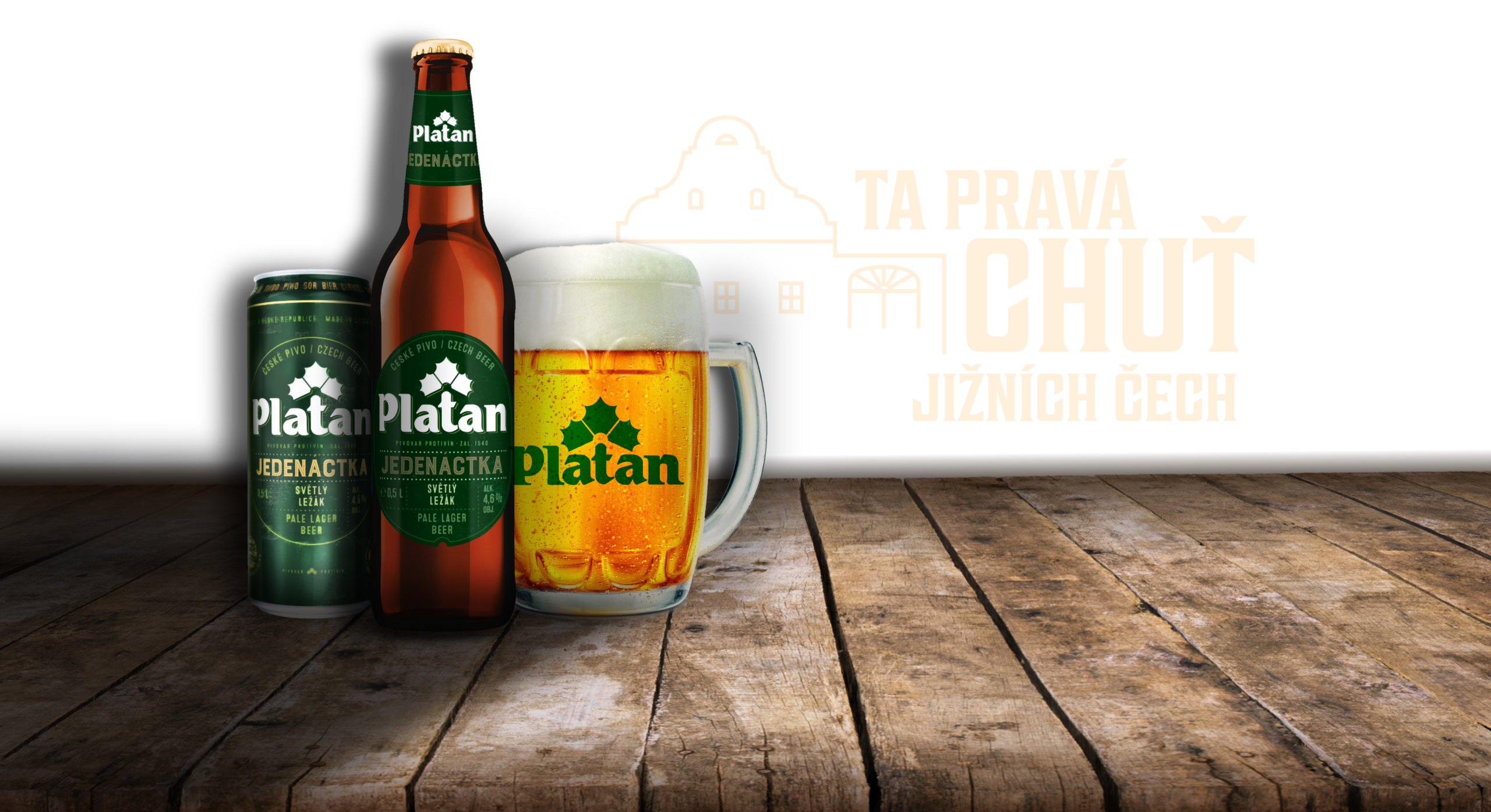
Pivovar Platan: A Historic South Bohemian Brewery with Centuries of Tradition
Pivovar Protivín, widely known through its flagship beer brand Platan, represents one of the most historically rich and technologically progressive brewing institutions in the Czech Republic. Located in the picturesque region of South Bohemia, this brewery combines deep-rooted tradition with modern brewing expertise, producing beers that reflect centuries of craftsmanship, regional identity, and innovation.
This article explores the origins, development, and modern significance of Pivovar Platan, tracing its journey from a feudal-era brewery to a contemporary producer within a larger brewing group.
Early Origins: Brewing in Protivín Since the 16th Century
The roots of the brewery date back at least to the early 16th century, with the first documented mention appearing in 1540. However, indirect historical evidence suggests that brewing activities in Protivín may have begun even earlier, possibly in the 15th century.
At that time, brewing was closely tied to feudal estates. The Protivín brewery was associated with noble families who controlled the land and local economy. Early records show that the brewery was already significant enough to supply surrounding taverns, with agreements ensuring that only beer from Protivín would be served in certain establishments.
This early integration into regional trade networks laid the foundation for the brewery’s long-term importance in the South Bohemian economy.
The Schwarzenberg Era: Innovation and Expansion
A major turning point came in 1711, when the brewery became the property of the noble Schwarzenberg family. Under their ownership, the brewery entered a period of substantial growth and modernization.
Between 1872 and 1876, a new, state-of-the-art brewery complex was constructed. Designed according to the latest technological principles of the time, the facility was built on a slope to allow gravity-assisted production processes—a highly advanced concept in 19th-century brewing.
The brewery quickly became known for its innovation. Among its achievements:
Establishment of one of the first modern brewery laboratories in Central Europe
Early adoption of yeast propagation techniques
Experimentation with advanced fermentation methods (precursors to modern tank fermentation)
Operation of its own hydroelectric power source
These innovations positioned the Protivín brewery among the most technologically advanced in Europe at the time.
The Golden Age: Late 19th and Early 20th Century
The late 19th and early 20th centuries marked the golden age of the brewery. Production volumes grew rapidly, reaching over 140,000 hectoliters annually by 1911.
Several factors contributed to this success:
Expansion of railway infrastructure, improving distribution
Strong management and investment from the Schwarzenberg family
Increasing demand for Czech lager-style beers
Protivín beer was exported across the Austro-Hungarian Empire and beyond, reaching international markets such as Berlin, Vienna, New York, and Chicago.
This period firmly established the brewery’s reputation as a producer of high-quality beer on a global scale.
Decline and Nationalization in the 20th Century
The outbreak of World War I marked the beginning of a difficult period. The brewery lost many of its export markets, and production declined significantly.
After World War II, in 1947–1948, the brewery was nationalized as part of broader political changes in Czechoslovakia. It was incorporated into state-controlled brewing enterprises, including Jihočeské pivovary (South Bohemian Breweries).
During the socialist era, the brewery continued to operate but faced limitations typical of centrally planned economies:
Reduced emphasis on innovation
Focus on quantity over diversity
Limited international presence
Despite these challenges, the brewery maintained its traditional brewing methods and continued producing consistent, well-regarded lagers.
Birth of the Platan Brand
Although the brewery itself dates back centuries, the Platan brand is relatively modern. The name was introduced in 1973 for a pale lager brewed in Protivín.
The brand name “Platan” (plane tree) was inspired by a distinctive triple-row avenue of plane trees lining the road to the brewery. This natural landmark became a symbol of the brewery and was later incorporated into its identity.
Over time, the Platan name expanded to represent the brewery’s entire product line and eventually became synonymous with the brewery itself.
Brewing Philosophy and Techniques
Pivovar Platan remains committed to traditional Czech brewing methods, which are central to its identity and product quality.
Key elements of its brewing philosophy include:
Use of high-quality Czech ingredients, including malt and Žatec (Saaz) hops
Water sourced from deep wells, known for its purity
Double decoction mashing, a traditional method enhancing flavor complexity
Open fermentation in traditional vessels
Extended lagering in cellar tanks for improved taste and clarity
These methods reflect a balance between historical authenticity and modern quality control.
Beer Portfolio
Today, Platan offers a diverse range of beers catering to different tastes while maintaining its Czech lager heritage.
Notable products include:
Platan Premium (12° classic pale lager)
Platan Jedenáctka (11° lager)
Platan Granát (Vienna-style amber lager)
Platan 10° (traditional Czech draft beer)
Non-alcoholic variants and lighter beers
The brewery’s portfolio reflects both tradition and adaptation to modern consumer preferences.
Post-Communist Transformation and Modern Ownership
After the fall of communism in 1989, the brewery underwent privatization and ownership changes. In 2000, the town of Protivín acquired the brewery, effectively saving it from closure.
Shortly thereafter, it was sold to private investors, and in 2008 it became part of a larger brewing group, now known as the Pivovary Lobkowicz Group.
This integration provided:
Financial stability
Access to broader distribution networks
Opportunities for modernization
Despite these changes, the brewery has retained its regional identity and traditional production methods.
Cultural and Regional Significance
Pivovar Platan is more than just a brewery—it is an integral part of South Bohemian culture. The brewery hosts events such as the annual beer festival, attracting visitors from across the region.
It also offers guided tours, allowing visitors to explore:
Historic brewing facilities
Traditional brewing processes
The cultural heritage of Czech beer production
These activities contribute to the region’s tourism and reinforce the brewery’s role as a cultural landmark.
Conclusion: Tradition Meets Modernity
Pivovar Platan stands as a testament to the enduring strength of Czech brewing tradition. From its origins in the 16th century to its current role within a modern brewing group, the brewery has successfully navigated centuries of political, economic, and technological change.
Its commitment to quality ingredients, traditional methods, and regional identity ensures that Platan remains a respected name in Czech beer culture. At the same time, its ability to adapt—whether through branding, ownership changes, or product diversification—demonstrates the resilience required to thrive in the modern beer industry.
For beer enthusiasts, historians, and travelers alike, Pivovar Platan offers a unique glimpse into the evolution of Czech brewing—where history is not just preserved but actively brewed into every glass.