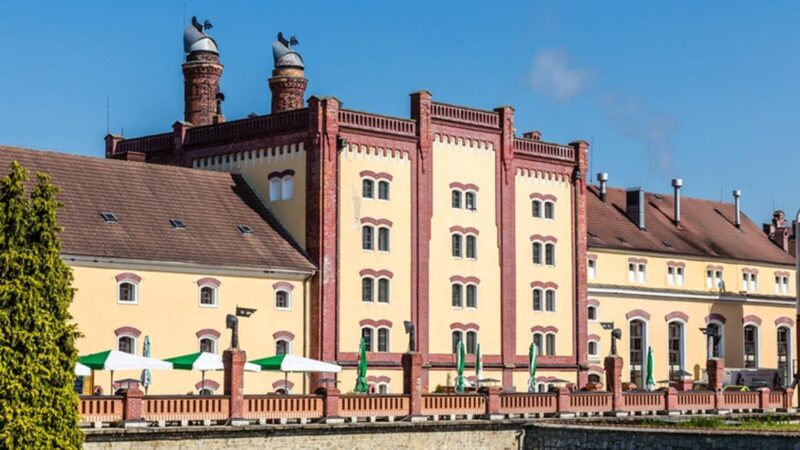
Introducing Czech Breweries, Part 15 – Pivovar Krakonoš
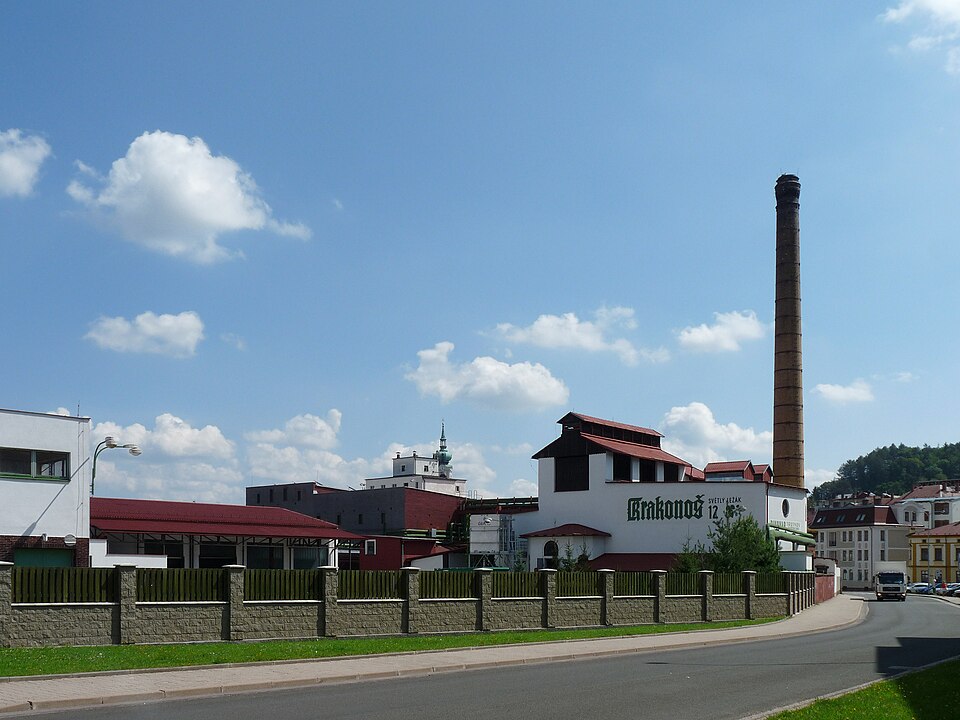
Pivovar Krakonoš: A Living Legacy of Czech Brewing Tradition
Nestled in the foothills of the Krkonoše Mountains in the town of Trutnov, Pivovar Krakonoš stands as one of the Czech Republic’s oldest and most enduring breweries. With roots stretching back to the 16th century, the brewery represents a remarkable continuity of brewing tradition, local identity, and craftsmanship. While many Czech breweries have been absorbed into multinational corporations, Krakonoš remains proudly independent, producing traditional beers that reflect centuries of regional brewing expertise.
This article explores the rich history, brewing philosophy, product range, and cultural significance of Pivovar Krakonoš, offering a comprehensive look at one of the country’s most authentic brewing institutions.
Origins: Brewing Rights and Medieval Foundations
The story of brewing in Trutnov predates the brewery itself. The town, founded in the 13th century, was granted brewing rights early in its history—an essential privilege in medieval Europe. By 1340, these rights were formally confirmed by King John of Luxembourg, reinforcing beer production as a key economic driver for the town.
Beer was not merely a beverage; it was a cornerstone of local commerce. At one point, brewing contributed up to 60% of Trutnov’s municipal income. The so-called “mile right” ensured that no competing beer could be produced within roughly 11 kilometers of the town, protecting local brewers from outside competition.
Before the establishment of a centralized brewery, beer was produced by individual burghers (citizens with brewing rights). However, as demand grew and production became more complex, the need for consolidation became evident.
The Founding of Pivovar Krakonoš (1582)
In 1582, Trutnov’s brewing citizens united to form a single municipal brewery—marking the official beginning of what would later become Pivovar Krakonoš.
This transition from decentralized brewing to a unified operation was a major step forward in terms of efficiency, consistency, and scale. The brewery quickly became a central institution in the town, producing beer for both local consumption and regional distribution.
However, the early years were not without challenges. Fires were a recurring threat in medieval towns, and Trutnov suffered several devastating blazes. In 1583, just one year after the brewery’s founding, a fire destroyed large parts of the town—including brewing facilities.
Despite these setbacks, the brewery persisted and rebuilt, laying the foundation for centuries of continuous operation.
Growth and Industrialization (19th–Early 20th Century)
The 19th century brought significant technological advancements that transformed brewing across Europe, and Pivovar Krakonoš was no exception.
By the late 1800s, the brewery had embraced mechanization. Key developments included:
Installation of steam engines and modern brewing kettles
Expansion of malt production facilities
Introduction of refrigeration and improved storage systems
Electrification of the brewery around 1900
Production volumes increased steadily. By 1900, the brewery was producing over 80,000 hectoliters annually, employing dozens of workers and operating multiple brewing batches per day.
The brewery also expanded its distribution network, supplying beer to surrounding towns and mountain resorts such as Špindlerův Mlýn. This period marked Krakonoš’s emergence as a significant regional brewery.
War, Nationalization, and the Communist Era
Like many Central European breweries, Krakonoš faced major upheaval during the 20th century.
Following World War II, the brewery was nationalized in 1947 and incorporated into state-controlled brewing enterprises. Over the following decades, it became part of larger regional brewery groups, including East Bohemian Breweries based in Hradec Králové.
During the communist era, production was standardized, and innovation was often limited by central planning. However, Krakonoš continued to operate and even expanded its output. In 1962, the brewery surpassed 100,000 hectoliters of annual production for the first time.
Modernization efforts included:
Installation of steel fermentation tanks
Expansion of bottling lines
Increased focus on bottled beer production
Despite the constraints of the system, the brewery maintained its reputation for producing reliable, traditional Czech beer.
A Cultural Footnote: Václav Havel and Krakonoš
One of the most fascinating episodes in the brewery’s history involves Václav Havel, the future president of the Czech Republic.
In the 1970s, Havel worked at the brewery as part of his forced labor during the communist regime. His experiences there inspired his famous absurdist play Audience, which is set in a brewery environment and critiques the surveillance and absurdities of totalitarian life.
This connection adds a unique cultural dimension to Krakonoš, linking it not only to brewing history but also to Czech literature and political transformation.
Post-Communist Revival and Independence
The fall of communism in 1989 brought sweeping changes to Czech industry, including brewing. Many breweries were privatized, and Krakonoš underwent a significant transformation.
In 1994, the brewery began operating under the private company Krakonoš spol. s r.o., marking a return to independence.
Unlike many Czech breweries that were acquired by multinational corporations, Krakonoš has remained independent—a fact that strongly influences its identity and production philosophy.
Modernization continued in the following decades:
Introduction of kegging systems
Improved filtration techniques
Installation of a new high-capacity bottling line in 2018
At the same time, the brewery has carefully preserved traditional brewing methods, striking a balance between innovation and heritage.
Brewing Philosophy and Production Methods
Pivovar Krakonoš is known for its commitment to traditional Czech brewing techniques. Its beers are:
Bottom-fermented (lager style)
Unpasteurized
Microbiologically filtered rather than heavily processed
One of the defining features of Krakonoš beer is its use of water sourced from a deep well (over 80 meters), fed by the natural springs of the Krkonoše Mountains. This high-quality water contributes significantly to the character and consistency of the beer.
The brewery emphasizes:
Natural ingredients
Balanced bitterness
High drinkability (a hallmark of Czech lagers)
Beer Portfolio: Tradition in Every Glass
Krakonoš produces a range of beers that reflect classic Czech styles. Its core lineup includes:
Light Draft Beers (Výčepní pivo)
Krakonoš 10° světlé – A light, refreshing lager with moderate bitterness
Krakonoš 10° tmavé – A dark version with roasted malt notes and caramel aroma
Premium Lagers (Ležák)
Krakonoš 11° – A balanced lager with clean hop aroma
Krakonoš 12° – A fuller-bodied beer with pronounced bitterness and rich foam
Seasonal Specials
Krakonoš 14° Easter and Christmas specials – Stronger beers brewed for festive occasions, offering deeper malt character and higher alcohol content
These beers are widely distributed across the Czech Republic, particularly in the eastern regions, and are appreciated for their consistency and traditional flavor profile.
Production Scale and Market Position
Today, Pivovar Krakonoš produces over 100,000 hectoliters of beer annually, placing it among medium-sized Czech breweries.
While it does not compete with large industrial giants like Plzeňský Prazdroj, Krakonoš occupies an important niche:
Independent regional brewery
Focus on traditional Czech lager styles
Strong presence in local pubs and restaurants
Its independence allows it to maintain a distinct identity in a market increasingly dominated by global brands.
The Name “Krakonoš” and Regional Identity
The brewery takes its name from Krakonoš, the mythical spirit of the Krkonoše Mountains. Often depicted as a guardian of nature and protector of the region, Krakonoš is a powerful symbol of local folklore.
By adopting this name, the brewery reinforces its connection to the region’s landscape, culture, and traditions. The branding emphasizes authenticity, heritage, and a deep sense of place—qualities that resonate strongly with Czech beer culture.
Krakonoš in Czech Beer Culture
Czechia is often described as the beer capital of the world, with the highest per capita beer consumption globally. Within this context, Krakonoš represents a specific and important segment:
A traditional regional brewery
A producer of classic Czech lagers
A symbol of continuity in brewing heritage
Unlike craft breweries that experiment with new styles, Krakonoš focuses on perfecting time-tested recipes. This makes it particularly appealing to purists and those seeking an authentic Czech beer experience.
Modern Challenges and Future Outlook
Like many traditional breweries, Krakonoš faces several challenges:
Competition from multinational brands
Rising popularity of craft beer
Changing consumer preferences
However, these challenges also present opportunities. The growing interest in local, authentic products plays to Krakonoš’s strengths. Its long history, independence, and commitment to quality position it well in a market that increasingly values heritage and craftsmanship.
Investments in modern equipment and sustainable practices—such as more efficient bottling lines—also demonstrate the brewery’s willingness to evolve while staying true to its roots.
Conclusion
Pivovar Krakonoš is more than just a brewery—it is a living institution that embodies centuries of Czech brewing tradition. From its origins in medieval brewing rights to its modern role as an independent regional producer, the brewery has navigated fires, wars, political upheaval, and industrial change.
Today, it stands as a testament to resilience, craftsmanship, and cultural continuity. Its beers, brewed using traditional methods and high-quality local resources, offer a genuine taste of the Czech Republic’s rich brewing heritage.
For beer enthusiasts, historians, and travelers alike, Krakonoš represents an authentic and enduring piece of Czech identity—one that continues to thrive in the shadow of the Krkonoše Mountains.
Image: Photo byCzeva, Wiki Commons