Introducing Czech Breweries, Part 10 – Holba
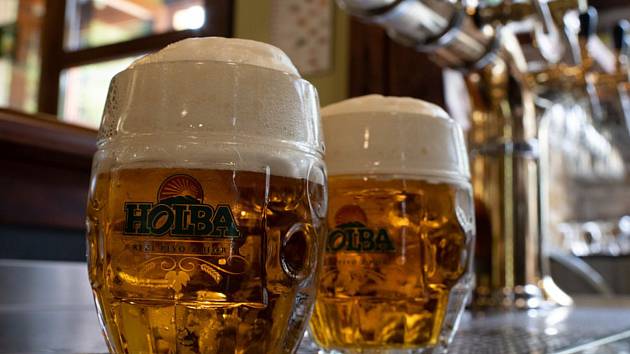
Pivovar Holba: A Mountain Brewery Rooted in Tradition and Czech Beer Culture
Nestled in the picturesque foothills of the Jeseníky Mountains in northern Moravia, Pivovar Holba stands as one of the Czech Republic’s most distinctive regional breweries. Known for its slogan “pure beer from the mountains,” Holba has built its reputation on a combination of traditional brewing methods, high-quality ingredients, and a strong connection to its natural surroundings. Since its founding in 1874, the brewery has evolved through political upheavals, industrial modernization, and changing consumer tastes, while maintaining a clear identity rooted in authenticity and regional pride.
Origins and Early Development
The story of Holba begins in the small town of Hanušovice, where the brewery was established in 1874 by the young brewmaster Josef Müllschitzký. His vision was to create a modern steam-powered brewery capable of producing high-quality beer using local resources. The first batch of beer was brewed in December of that year, marking the beginning of a brewing tradition that continues to this day.
From the outset, Holba benefited from its unique geographical location. The Jeseníky Mountains provided access to exceptionally pure water sources—an essential ingredient in brewing. This natural advantage would later become central to the brewery’s identity and marketing.
In the late 19th century, ownership of the brewery shifted to a group of investors, including the Oberleithner family and Dr. Karl Chiari. By 1906, Holba had become part of a larger joint-stock company that consolidated several regional breweries. This integration allowed for increased production capacity and broader distribution, helping Holba expand beyond its local market.
Growth in the Interwar Period
The period between the First and Second World Wars marked a significant phase of growth for Holba. During this time, the brewery steadily increased its production and rose to become one of the largest beer producers in Czechoslovakia, ranking third in output at its peak.
This success was driven by both technological improvements and the growing popularity of Czech lager-style beers. Holba’s ability to scale production while maintaining quality helped it compete with larger breweries in major cities.
Nationalization and Socialist Era
Following World War II, the brewery—like many others in Czechoslovakia—was nationalized under the communist regime in 1948. Holba lost its independence and became part of a state-owned enterprise based in Přerov.
Despite the constraints of centralized planning, the brewery continued to operate and even modernize its facilities. By the 1970s, Holba had introduced aluminum kegs to replace traditional wooden barrels and surpassed an annual production of 300,000 hectoliters.
One of the most important milestones of this era came in the early 1980s with the introduction of Holba Šerák, a medium-strength lager named after a nearby mountain peak. First brewed experimentally in 1983 and officially launched in 1984, Šerák quickly became the brewery’s flagship product and remains its most recognizable beer today.
Transition to a Market Economy
The fall of communism in 1989 ushered in a new era for Holba. In 1996, the brewery was transformed into a joint-stock company, regaining its independence and entering the competitive market economy.
During this period, Holba invested heavily in modernization and quality improvement. One particularly important development was the securing of its own high-quality water sources in 1993. The water, drawn from deep underground reserves in the Jeseníky region, meets exceptionally strict standards and contributes significantly to the character of Holba beers.
The brewery also expanded its product portfolio, introducing a range of beers including light draft beers, pale lagers, semi-dark lagers, and specialty brews. This diversification helped Holba remain competitive in a market increasingly dominated by both large multinational breweries and a growing craft beer sector.
Modern Era and Pivovary CZ Group
In 2021, Holba became part of the newly formed Pivovary CZ Group, which объединed it with other traditional Czech breweries such as Litovel and Zubr. This consolidation aimed to strengthen the position of regional breweries in a globalized market while preserving their individual identities.
Today, Holba produces over 350,000 hectoliters of beer annually, placing it among the significant medium-sized breweries in the Czech Republic. While its distribution has expanded both domestically and internationally, the brewery continues to emphasize its roots in Hanušovice and the surrounding mountain landscape.
Brewing Philosophy and Products
Holba’s brewing philosophy is centered on tradition, quality, and locality. The brewery uses classic Czech brewing techniques, including decoction mashing and extended lagering, to produce beers with a balanced flavor profile.
The core ingredients include Moravian malt, Czech hops, and mountain water. This combination reflects the broader traditions of Czech brewing while giving Holba a distinctive regional character.
Among its most popular beers are:
Holba Šerák 11° – a pale lager known for its drinkability and mild bitterness
Holba Horská 10° – a lighter draft beer
Holba Keprník 12° – a specialty lager with aromatic hops
Semi-dark and seasonal beers
These beers are widely available in bottled, canned, and draft formats, catering to both everyday consumption and more specialized markets.
Cultural and Regional Significance
Holba is more than just a brewery—it is an important cultural institution in the Hanušovice region. The brewery organizes annual beer festivals, known as “Pivovarské slavnosti,” which attract visitors from across the Czech Republic. These events celebrate not only beer but also local music, food, and traditions.
The brewery also operates a visitor center and museum, offering guided tours that showcase the history of beer production in the region. This contributes to local tourism and helps preserve the heritage of Czech brewing.
Environmental and Natural Identity
A defining feature of Holba is its strong connection to the natural environment. The Jeseníky Mountains are not only a source of water but also a key element of the brand’s identity. The slogan “pure beer from the mountains” reflects a commitment to environmental quality and sustainability.
The brewery has also engaged in ecological initiatives, such as maintaining water reservoirs that support local wildlife. These efforts underline the importance of environmental stewardship in modern brewing.
Conclusion
Pivovar Holba represents a compelling example of how a regional brewery can balance tradition and innovation. From its origins as a small steam brewery in 1874 to its current status as part of a modern brewing group, Holba has navigated more than a century of change while maintaining its core identity.
Its emphasis on natural ingredients, traditional methods, and regional heritage continues to resonate with consumers in the Czech Republic and beyond. In an era of globalization and industrialization, Holba stands as a reminder that authenticity and local character remain essential elements of great beer.